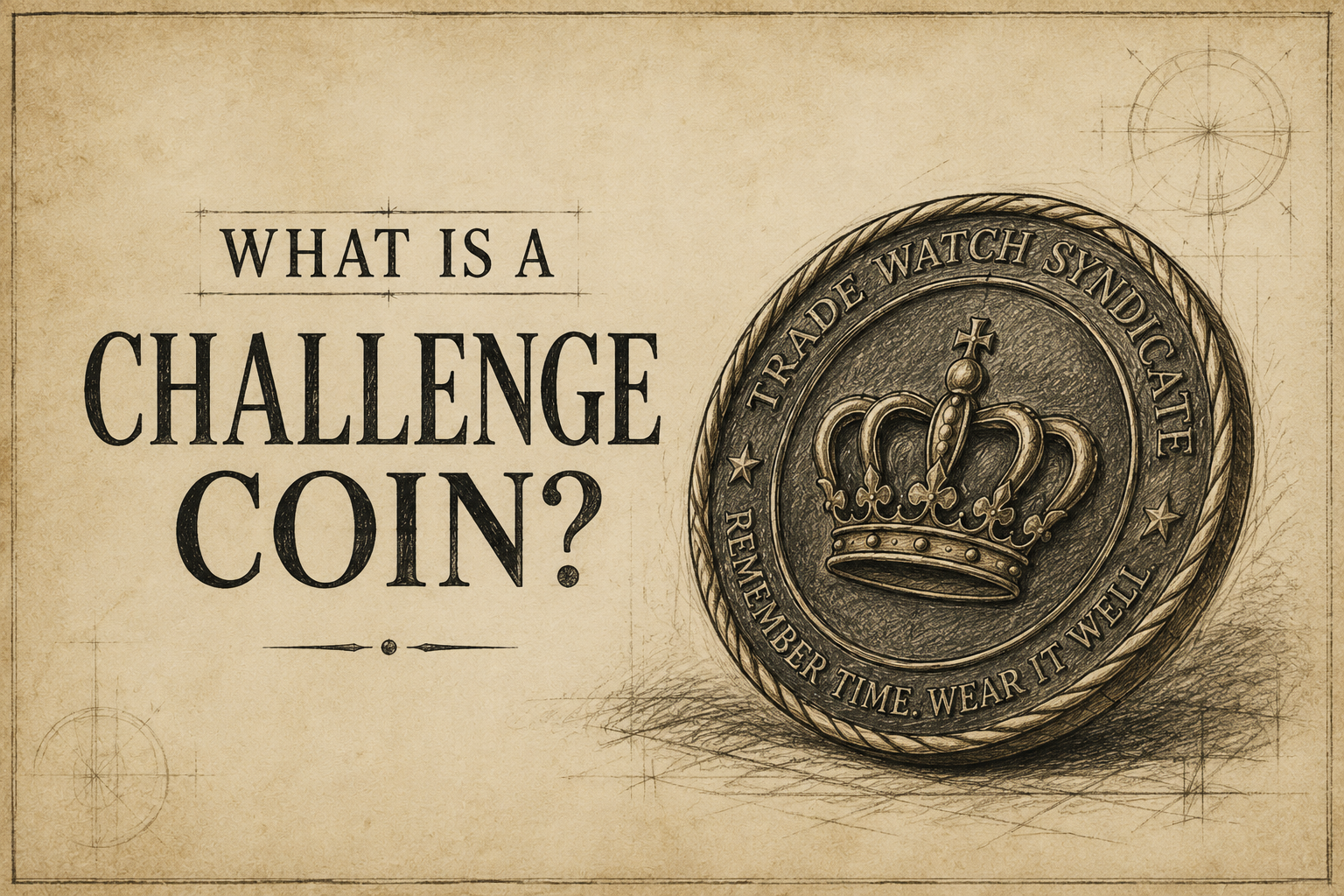
What Is a Challenge Coin?
From military tradition to personal meaning, challenge coins have carried stories for generations. Explore their history, the tradition behind the challenge, and how a small piece of metal can become a marker of service, belonging, memory and time.
A challenge coin is a small piece of metal that can carry a surprising amount of weight.
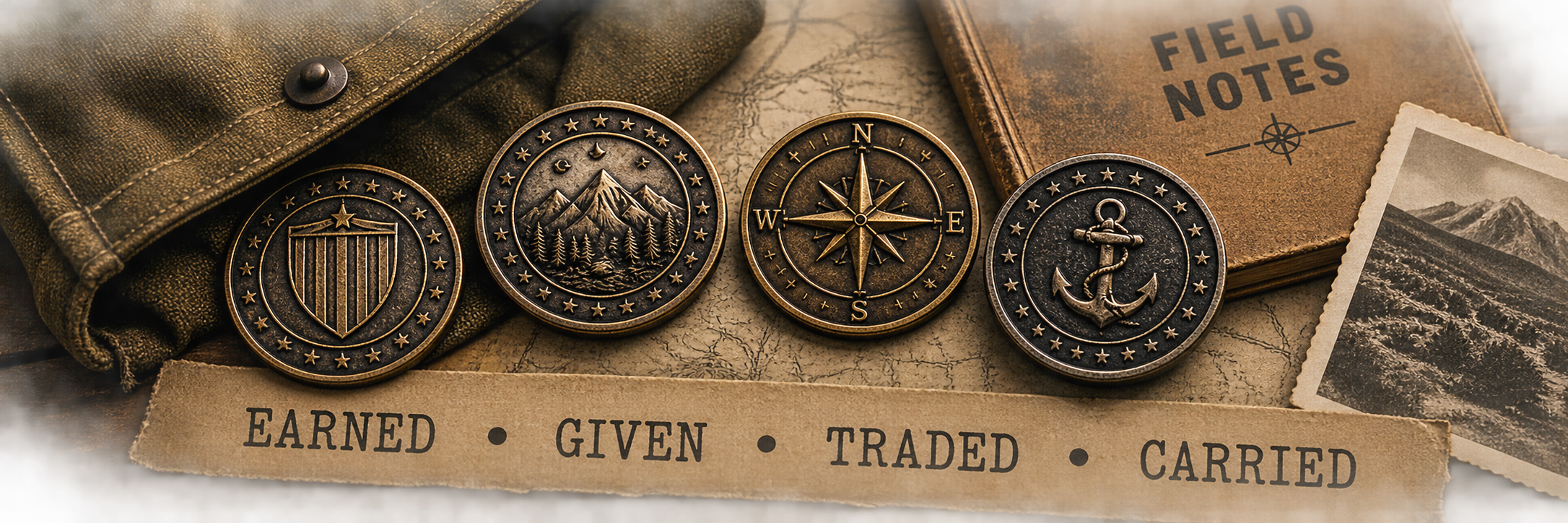
Traditionally exchanged within military units, first responder organizations and other groups, challenge coins have been used to recognize service, commemorate events, mark accomplishments and represent belonging. Some are earned. Some are given. Some are traded. And increasingly, some are simply collected because of the history, craftsmanship or story they represent.
But the coin itself has never really been the point.
What gives a challenge coin meaning is what — or who — it connects you to. A unit. A place. An accomplishment. A person. A moment in time.
That idea is part of what drew us to challenge coins in the first place.
They’re objects meant to be carried, handled and passed from one person to another. They can get scratched. They can develop wear. They can spend years forgotten in a drawer before suddenly bringing back a memory you hadn’t thought about in decades.
In that way, a challenge coin can become something more than a collectible.
It can become a marker of time.
WHERE DID CHALLENGE COINS COME FROM?
The exact origin of the challenge coin is difficult to pin down. Like many traditions passed from one generation to the next, its history is a mix of documented practice and stories that have grown with the telling.
One of the most popular origin stories dates back to World War I. According to the legend, a wealthy American officer had bronze medallions made for the members of his flying squadron. One pilot carried his in a small leather pouch around his neck.
After being shot down behind enemy lines and captured by German forces, the pilot reportedly escaped, only to be detained by French troops who suspected he was a German saboteur. With no identification, he produced the medallion bearing his squadron's insignia. A French soldier recognized it, his identity was confirmed, and instead of being executed, he was returned to his unit.
It's a great story.
It's also almost certainly impossible to verify.
What we do know is that military units have a long history of using medallions, tokens and specially created coins to represent service, membership and shared experience. Over time, challenge coins became particularly associated with the U.S. military, where they were presented by commanders, exchanged between service members and carried as symbols of unit identity and recognition.
The tradition eventually traveled well beyond the military. Today, challenge coins can be found in fire departments, law enforcement agencies, government organizations, clubs, businesses and communities of nearly every kind.
The settings changed.
The idea behind the coin didn't.
THE CHALLENGE BEHIND THE COIN
The name challenge coin comes from a tradition often known as a coin check.
The rules vary depending on who is telling the story — which is probably part of the fun — but the basic idea is simple. Someone produces their coin and issues a challenge. Everyone being challenged has to produce theirs.
If you can't?
Traditionally, you're buying the drinks.
If everyone produces a coin, the person who issued the challenge may be the one picking up the tab instead.
There are plenty of variations. Some traditions involve placing or slapping the coin on a table. Others have rules about how quickly it must be produced, whether it has to be carried on you, or even what counts as a legitimate challenge.
But underneath the ritual is something more interesting than who buys the next round.
You carried the coin because you belonged.
It was a small, physical reminder of the people you served with, the organization you represented or the experience you shared. Having it with you meant something — and being challenged to produce it was a way of proving that connection.
Today, plenty of people own challenge coins without ever participating in a coin check. The tradition has grown far beyond that ritual.
But the name stuck.
MORE THAN MEMBERSHIP
Challenge coins may have grown from traditions of belonging, but their meaning didn't stop there.
Over time, coins became a way to recognize something worth remembering.
They've been presented to mark accomplishments, commemorate deployments and events, recognize exceptional work, honor service, welcome someone into a group and thank people whose contributions might otherwise go unnoticed.
Sometimes the meaning is obvious. A unit insignia. A date. A location. A mission.
Other times, the story behind a coin is known only to the person carrying it.
And that's part of what makes them interesting.
A challenge coin doesn't need to have monetary value to become valuable. Its worth can come entirely from who gave it to you, why you received it, or what was happening in your life when it found its way into your hand.
Years later, the details may fade. The coin doesn't.
Pick it up again and suddenly you remember the place. The people. The story.
The object becomes attached to the memory.
And in some ways, that's not very different from the watches we talk about here.
A watch can tell time.
A coin can sit in your pocket.
Neither description comes close to explaining why someone might keep one for the rest of their life.
THE THINGS WE CARRY
Some objects earn a place in our lives that has very little to do with what they cost.
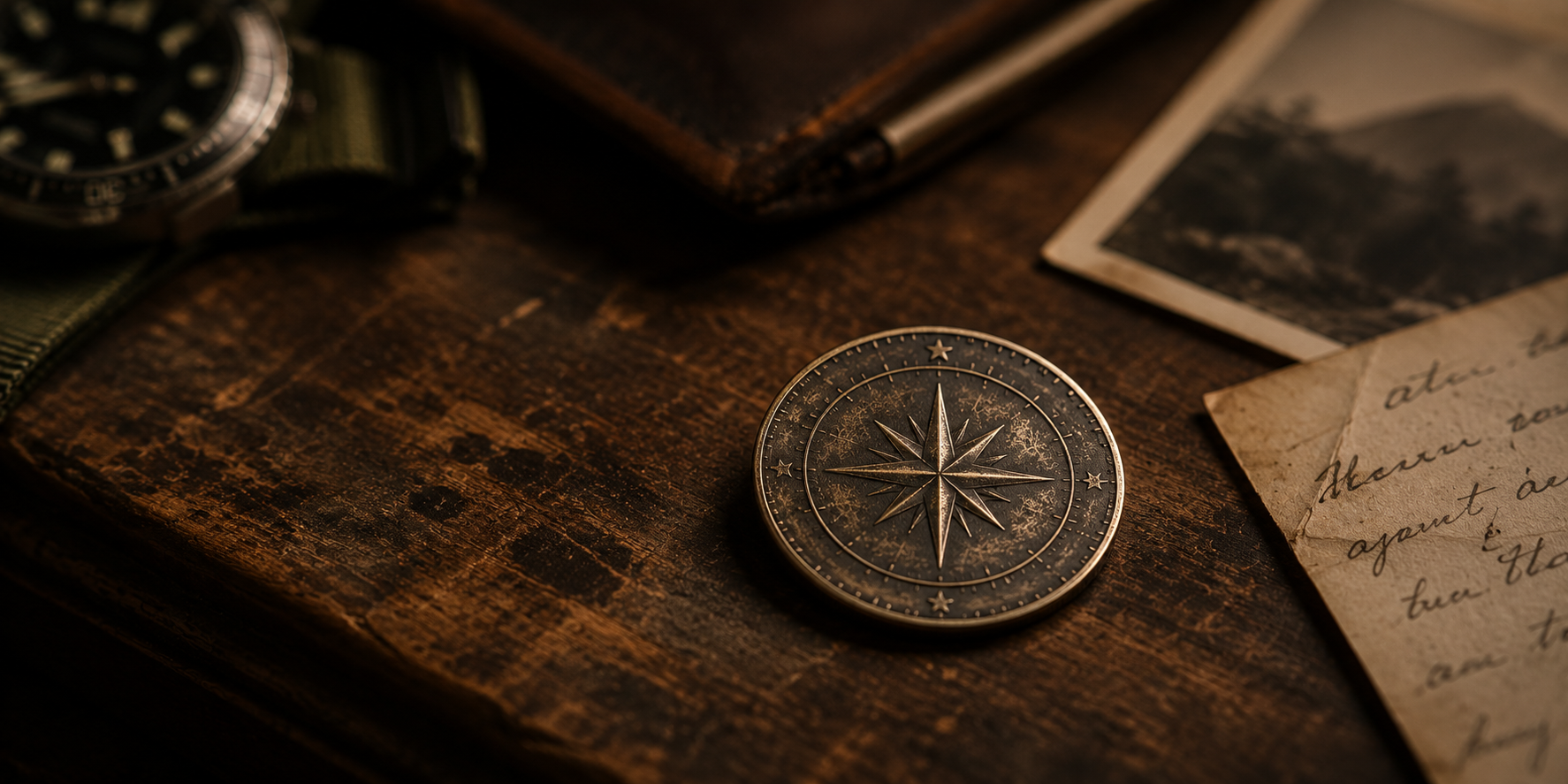
A watch handed down from a parent. A coin received after an accomplishment. A photograph tucked into a drawer. A gift that would mean almost nothing to anyone else, but everything to the person who received it.
We keep these things because they become connected to people, places and moments.
They become reminders.
That's part of what makes challenge coins interesting to us. Their history may be rooted in service and belonging, but the idea behind them is much bigger than any one tradition.
A small object can carry a story far larger than itself.
And perhaps that's why challenge coins have found a home far beyond the organizations that first made them popular. Today they're created for communities, events, milestones, causes and sometimes simply around an idea worth carrying.
The meaning doesn't have to be assigned by an institution.
Sometimes, you get to decide what the object means to you.
WHY WE MADE ONE
When Trade Watch Syndicate began, we knew we wanted to create something that could exist beyond a screen.
Something you could hold. Carry. Give to someone. Leave on a desk. Toss in a pocket. Find years later and remember exactly why you kept it.
A challenge coin felt right.
Not because we were trying to recreate the traditions that came before us, or claim a history that isn't ours. Quite the opposite. We respected what challenge coins have represented for generations, while believing the format could carry a different kind of message.
Ours started with two words:
Memento Temporis. Remember Time.
It's a reminder that time is limited — and that knowing that should change the way we use it.
The watches we wear measure time. The objects we keep can remind us of where it went.
Our first coin was created to live somewhere between those two ideas.
It wasn't designed to commemorate a unit, rank or organization. You don't have to earn it. There is no membership required to carry one.
It's simply a physical reminder:
Time is limited. Use it well.
Carry it. Give it away. Leave it somewhere you'll see it. Let it get scratched.
And someday, maybe it will remind you of a moment worth remembering.
Memento Temporis.
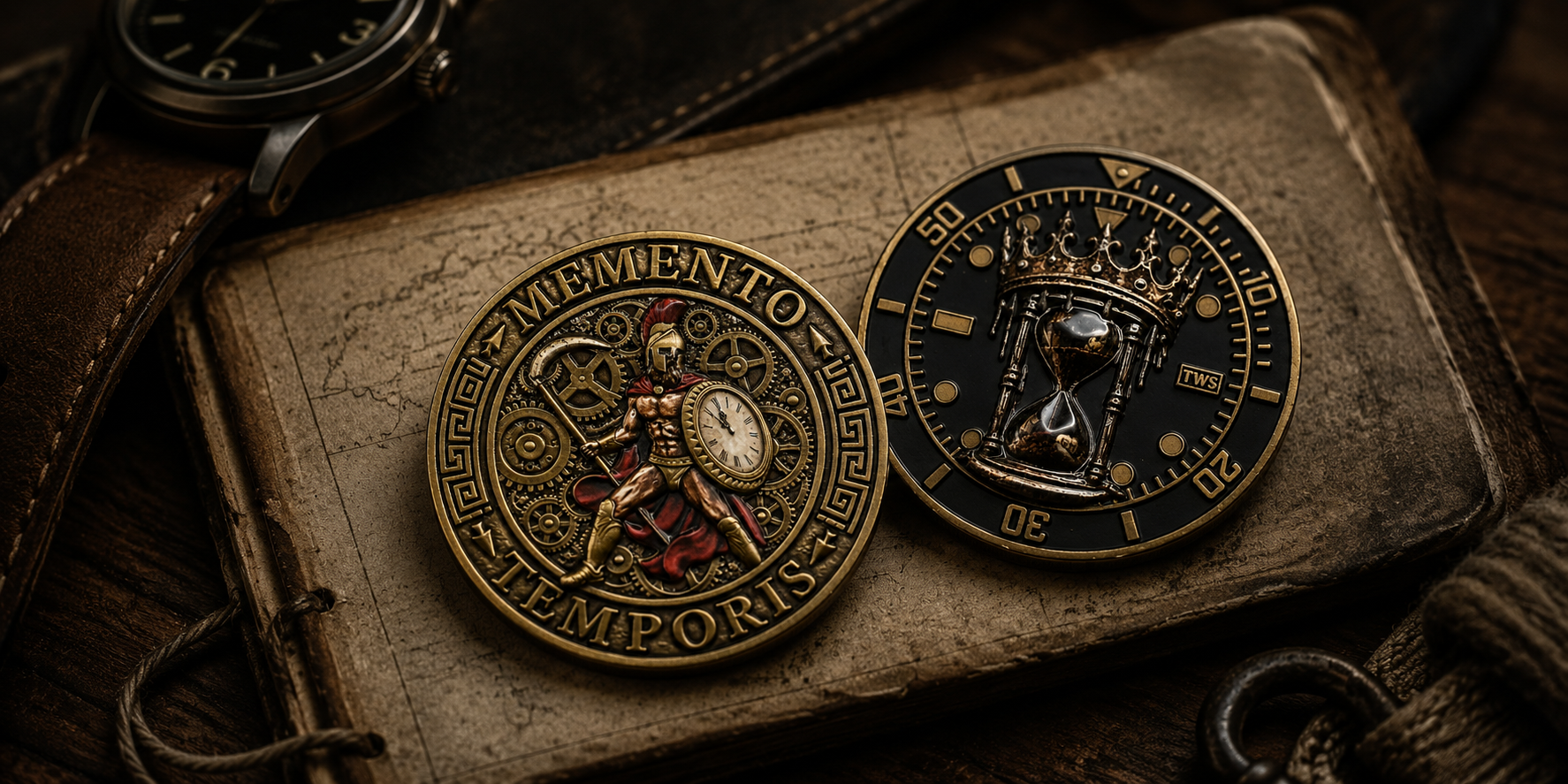
WHAT WE CHOOSE TO CARRY
A challenge coin can begin as a piece of metal.
What happens after that is up to the person who carries it.
Maybe it marks an accomplishment. Maybe it reminds you of someone. Maybe you give it away at exactly the right moment. Maybe it spends years in a drawer before you find it again and remember a version of yourself you haven't thought about in a long time.
That's the strange thing about the objects we keep.
We give them meaning, and eventually, they give our memories somewhere to live.
It's something I've come to appreciate more as I've gotten older. Some of the things that mean the most to me aren't important because of what they are. They're important because of who they remind me of, where they've been, or the moment in my life they've become attached to.
That's true of the watches I wear. It's true of the things that have been handed down to me. And it's part of why we made this coin.
I don't know where every Memento Temporis coin will end up. Some will probably sit on desks. Some will get carried. Some will be collected. Some will be given to someone else.
I hope they get scratched.
Because that means they went somewhere.
Challenge coins have carried stories for generations. The people carrying them have changed. The reasons for making them have changed. But perhaps that's exactly why the tradition has endured.
A coin is small enough to carry.
A story isn't.
Memento Temporis.
Finding the right watch size isn't just about case diameter. Lug-to-lug, thickness, case shape, wrist size and even how you view the watch can completely change how it wears. Here's how to find the size that works for you.